Search is changing faster than at any point in the past decade. AI tools like ChatGPT, Perplexity, and Google AI Overviews are reshaping how people find information — and what it takes to be found.
But this does not mean traditional SEO is obsolete. It means the landscape has a new layer on top of it.
This guide breaks down exactly how AI search differs from traditional search, what changes, what stays the same, and what you need to do differently.
How Traditional Search Works
Traditional search engines like Google crawl the web, index pages, and rank them based on hundreds of signals: relevance, authority, content quality, technical performance, and more.
When a user searches, they see a list of ranked links. They click one. They visit the page. Traffic, engagement, and conversion follow.
The optimization game: rank as high as possible for queries relevant to your business.
How AI Search Works Differently
AI search tools do not just rank pages — they generate answers.
When a user asks ChatGPT a question, the system retrieves relevant content, synthesizes it, and delivers a direct response. The user often gets their answer without clicking anywhere.
The optimization game changes: it is no longer just about ranking — it is about being cited as a source inside the generated answer.
Key differences at a glance:
| Factor | Traditional SEO | AI Search (GEO) |
|---|---|---|
| Output | Ranked list of links | Generated text answer |
| User action | Click through to site | Often reads answer directly |
| Signal weight | Links, rankings, technical SEO | Content clarity, entity trust, passage quality |
| Citation format | Your link appears in results | Your content cited in answer |
| Keyword matching | Exact and near-exact match | Semantic, intent-based |
| Content structure | Page-level optimization | Passage-level optimization |
| Schema impact | Rich snippets, CTR | Entity verification, citation accuracy |
What Changes with AI Search
1. Zero-Click Gets Bigger
Traditional search already had zero-click behavior — featured snippets, knowledge panels, and answer boxes that gave users answers without requiring a click.
AI search massively expands this. Google AI Overviews, Perplexity, and ChatGPT all deliver answers synthesized from multiple sources. Users may never visit any of those sources.
What this means: Being cited as a source in an AI answer still has value — brand visibility, trust building, indirect traffic — even without a direct click. Measuring only clicks underestimates the value of AI visibility.
2. Content Is Read at the Passage Level
Traditional SEO ranks pages. AI search reads passages.
An AI system looking for an answer to “how long does SEO take?” will extract the most direct, relevant passage from your page — not rank the whole page based on a composite score.
What this means: Each section of your content needs to be able to stand alone as a complete, clear answer to a specific question. Vague intros and padded conclusions hurt you more in AI search than in traditional search.
3. Entity and Brand Signals Matter More
Traditional SEO is link-focused. AI search is entity-focused.
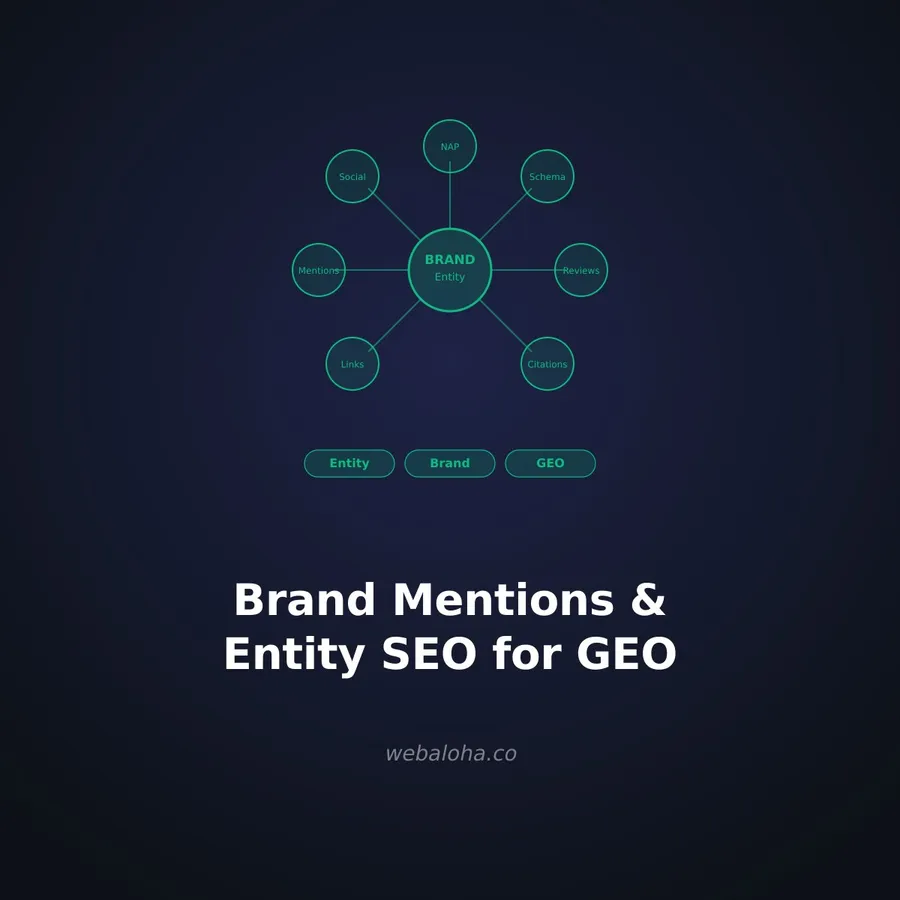
AI systems work with named entities — businesses, people, products, places. If your brand is consistently described and referenced the same way across your website, social profiles, directories, and third-party mentions, AI systems build a clearer entity model for you.
What this means: Brand mention consistency, review presence, and entity signals matter alongside your technical SEO. A brand that is well-described off-site gets cited more accurately on-site.
4. Structured Data Plays a Bigger Role
In traditional SEO, schema markup earns rich snippets — star ratings, FAQs, breadcrumbs in search results. The impact is real but incremental.
In AI search, schema markup helps AI systems verify who you are, what you offer, and how your content should be classified. It reduces the guesswork AI systems have to do.
What this means: Schema that previously had limited traditional SEO value — Organization, Person, LocalBusiness, WebApplication — has higher value in AI contexts because it builds entity clarity.
5. Content Freshness Matters More
AI platforms like Perplexity explicitly surface recent, updated information. An article that was accurate in 2023 but has not been touched since may lose citations to a newer, updated version of the same content.
What this means: Keeping key pages current — updating dates, refreshing statistics, revising outdated sections — is more important than ever.
What Stays the Same
Technical Foundations Still Apply
AI search tools are built on web content. They cannot cite what they cannot crawl.
Fast load times, clean crawlability, no broken links, proper indexing — all of it still matters. A site that is technically broken will not earn AI citations regardless of content quality.
Check that your robots.txt allows major AI crawlers like GPTBot, PerplexityBot, and ClaudeBot. Block them and you opt out of AI visibility entirely.
Strong Content Is Still the Foundation
AI systems cite authoritative, useful, well-written content. The same qualities that make a page rank well — depth, accuracy, expertise, clarity — also make it more likely to be cited in AI answers.
The difference is that AI search is less forgiving of thin content hidden behind a strong domain. A weak page on a strong domain can still rank. A weak page is less likely to earn AI citations because AI systems read the passage, not just the domain.
Topic Authority Signals Still Compound
A site that covers a topic comprehensively — with interconnected articles, tool pages, and service pages all linking to each other — builds topical authority in both traditional and AI search.
Our content optimization and GEO guide are part of a cluster of interconnected GEO content, which signals to AI systems that this site genuinely covers AI visibility as a topic, not just mentioning it in passing.
The Practical Shift: SEO + GEO
The most useful frame for 2026 is not “SEO vs. GEO” but “SEO + GEO.”
Traditional SEO gives you the technical and content foundation. GEO layers on:
- Passage-level writing — clear, extractable answer blocks
- Entity signals — consistent brand and business description across the web
- Schema depth — structured data for AI verification
- Technical AI access — robots.txt, llms.txt, crawl health
- Off-page trust — mentions, citations, reviews
A business that does both well will be visible in both traditional search results and AI-generated answers — covering two increasingly separate channels of discovery.
Where to Start
If you are new to AI search optimization, start here:
- Check your crawlability — use our AI Search Visibility Checker to see how AI-ready your site is
- Review your robots.txt — make sure you are not blocking AI crawlers
- Add schema markup — structured data is one of the highest-impact technical GEO moves
- Rewrite key pages — apply passage-level content structure to your most important pages
- Create an llms.txt — give AI systems a curated index of your site with our free generator
For a complete strategy, our GEO Services team can audit your current visibility and build a roadmap to improve it.
AI search is not replacing traditional search — it is adding a new layer to it. The businesses that understand both will have a significant advantage over those optimizing for only one.
Frequently Asked Questions
Is traditional SEO still worth doing in 2026?
Yes. Traditional SEO remains essential. AI search platforms are built on top of web content, and sites that rank well in traditional search tend to perform better in AI search too. Strong technical SEO, fast page speed, clean indexing, and quality content still form the foundation of any AI visibility strategy.
What is the difference between SEO and GEO?
SEO (Search Engine Optimization) focuses on ranking in traditional search results like Google’s blue links. GEO (Generative Engine Optimization) focuses on being cited in AI-generated answers from tools like ChatGPT, Perplexity, and Google AI Overviews. GEO builds on SEO and adds optimizations specific to how AI systems retrieve, understand, and cite content.
Do keywords still matter for AI search?
Yes, but how they matter is changing. AI search systems focus more on semantic intent and topic coverage than exact keyword matching. Instead of targeting a single keyword phrase, optimizing for a topic comprehensively — covering related questions, terms, and contexts — tends to perform better in AI search.
Does link building still matter with AI search?
Backlinks remain a trust signal, but AI search also values brand mentions, entity consistency, and citations from authoritative sources — even without a clickable link. A brand mentioned naturally in a trusted article can carry real weight in AI systems, even if no link is present.
Why does my site rank well but not appear in AI answers?
AI search systems select content based on different signals than traditional ranking. A page can rank on page one but still miss AI citations if it lacks clear answer blocks, structured data, passage-level clarity, or strong entity signals. AI citation optimization requires additional steps beyond standard SEO.
What is zero-click search and how does it relate to AI?
Zero-click search happens when users get their answer directly in search results without clicking through to a website. AI Overviews and AI-generated answers significantly expand zero-click behavior. This is why appearing as a cited source in those AI answers — even if the user does not click — matters for brand visibility.