
AI Search Visibility Checker
Last updated:
Run a technical GEO/AEO and AI citation readiness audit for crawler access, Google indexability, JSON-LD, and page structure. This tool does not query AI products, track citations, or report AI Overview appearances.
Scope: technical readiness only. This AI visibility checker does not run prompts, inspect platform indexes, verify citations, or track appearances in ChatGPT, Perplexity, Gemini, Claude, Google AI Overviews, or AI Mode.
Technical gaps can limit AI-search discovery.
We fix crawl, entity, structured-content, and authority gaps, then track whether target prompts actually cite or mention your brand.
Good technical readiness. Now measure actual visibility.
A passing technical check does not prove AI citations. Our GEO work pairs evidence-led improvements with prompt and citation monitoring.
Want us to act on this result? Fix these findings →
Prefer the partnership route? Refer clients to us, earn 10% →
How the AI Search Visibility Audit Works
This tool runs a technical AI search visibility audit across four groups of foundations that can support discovery and clear interpretation:
- Crawler controls, separates AI search crawlers from training crawlers and user-triggered fetchers, then reports allowed, blocked, unknown, or not governed as appropriate.
- Structured data, counts JSON-LD blocks, parses them, and verifies that parsed nodes have non-empty types. This is a baseline syntax and shape check, not full Schema.org or Google rich-result validation.
- Content structure, scores whether a title and H1 exist, while reporting the meta description, sections, and readable server-returned text without arbitrary length penalties.
- Standard web signals, checks Googlebot rules, robots and googlebot meta directives, X-Robots-Tag, canonical URLs, language, authorship, dates, Open Graph metadata, and sitemap references.
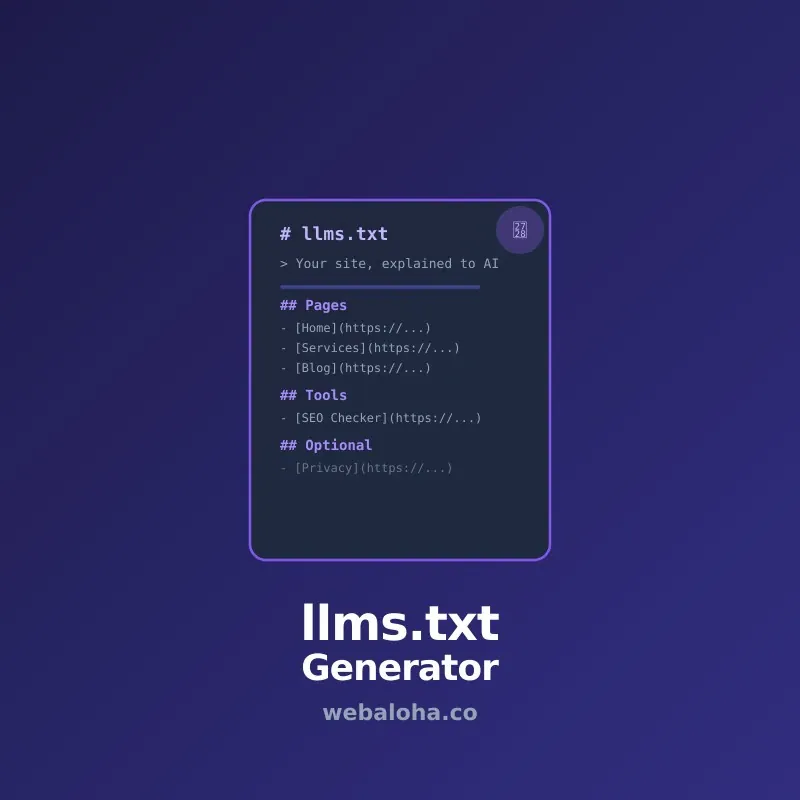
Each check shows its outcome and whether it contributes to the score. Unknown results, optional signals, publisher policy choices, word volume, description length, and unvalidated canonical presence stay unscored. The combined 0-100 score is a Web Aloha diagnostic heuristic, not a platform score or prediction. An optional llms.txt file can provide a human-readable site overview, but major search engines do not require it for AI features.
Why Technical AI Search Readiness Matters
Technical readiness cannot earn a citation by itself, but weak foundations can make otherwise useful content harder to discover, interpret, and attribute:
- Access comes first, search crawlers need both robots permission and practical access through the origin, CDN, and firewall. User-triggered fetchers follow provider-specific policies.
- Clear pages reduce ambiguity, descriptive headings, visible facts, and consistent entity information make a page easier for people and machines to interpret.
- Attribution needs identity, consistent organization, author, source, and date information helps connect claims to a real publisher.
- Evidence still wins, original research, firsthand testing, expert review, links, and independent mentions matter beyond anything this checker can see.
- Measurement closes the loop, repeatable prompt tracking and citation reports are required to know whether readiness work changes actual visibility.
For a comprehensive guide on optimizing for AI search, read our complete guide to Generative Engine Optimization (GEO) and learn how AI search engines pick sources. To track progress over time, see how to measure GEO and AI visibility.
What the Crawler Results Mean
Search, model training, and a user asking an assistant to open a page are different uses. This audit follows the current first-party descriptions from OpenAI, Anthropic, and Perplexity.
- AI search crawlers: OAI-SearchBot, Claude-SearchBot, and PerplexityBot support search discovery. Their known robots result is scored.
- Training crawlers: GPTBot and ClaudeBot are not search crawlers. Allowing or blocking training is a publisher choice and is never scored.
- User-triggered fetchers: ChatGPT-User, Claude-User, and Perplexity-User act after a user request. OpenAI says robots rules may not apply to ChatGPT-User; Perplexity says its user fetcher generally ignores them; Anthropic documents robots support for its bots.
- Unknown: a timeout, network error, rate limit, authentication response, or other HTTP failure is not evidence of either allow or block. Retry and inspect server logs.
Google documents robots.txt crawling separately from page-level indexing controls. This checker therefore tests Googlebot access plus robots meta and X-Robots-Tag directives. A nosnippet or max-snippet:0 directive can restrict direct use in Google AI Overviews and AI Mode, but its presence is treated as an unscored publisher choice, not an error.
How to Improve AI Search Readiness
Start with the failed checks, then validate the improvements against real prompt and citation data:
- Choose crawler access intentionally, distinguish search and retrieval access from training access before changing robots.txt. Use our AI Crawler Tester to review the rules.
- Make the publisher unambiguous, keep organization details consistent and use appropriate Organization, LocalBusiness, Person, or Article markup that matches visible content.
- Fix invalid structured data, use supported schema types for their intended purpose and validate them with the Schema Markup Validator.
- Organize the answer clearly, use descriptive headings, concise definitions, evidence, and self-contained sections. Check hierarchy with the Heading Checker.
- Publish something worth citing, add original data, real tests, methodology, expert attribution, and updates rather than expanding content to hit an arbitrary word count.
- Measure actual visibility, maintain a representative prompt set and track mentions, citations, cited URLs, and qualified visits over time.
Explore all our free AI-visibility tools and guides in the GEO Hub. For professional AI search optimization, explore our GEO services and SEO services.
Next steps
AI Search Visibility Checker related tools and articles
Continue with the closest follow-up checks and guides based on this tool's topic, crawl intent, and optimization workflow.

AI Search Readiness Checker: FAQ
What does this AI search visibility checker audit?
How is the 0 to 100 readiness score calculated?
Which AI crawlers does the audit distinguish?
Is this an AI visibility checker or an AI citation tracker?
How should I prioritize failed and warning checks?
Why can the checker miss content or schema added by JavaScript?
Why might the readiness check fail to run?
What data is sent when I run this readiness check?
Free 48-Hour Website Audit
Not sure what to fix first on your own website? We'll review it and tell you, in plain English. Free & non-obligatory.
Ready to Measure Real AI Visibility?
We strengthen the foundation, test the prompts that matter, and track real mentions and citations over time. No guarantees, transparent evidence.