
DNS Propagation Checker Tool Online
Last updated:
Compare live DNS answers across multiple public resolvers to see whether records are consistent, still propagating, or misconfigured before a launch.
Enter a domain and choose the DNS record type:
We fix this
Found issues? That’s exactly what our SEO audit fixes.
Our SEO Audit + Essentials package ($555, one-time) finds and fixes exactly these kinds of problems, with a prioritized plan in plain English.
Looks clean here. How is the rest of your SEO?
One passing check doesn’t make a ranking strategy. We audit the full picture: content, technical SEO, internal links, and search intent.
More options Send us this result or get a copy by email
How the DNS Propagation Checker Works
This tool asks multiple public DNS-over-HTTPS resolvers for the same domain and record type.
- Domain validation, the API accepts a domain only, not a URL or path.
- Parallel resolver queries, Cloudflare, Google, and AdGuard DNS are queried at the same time.
- Record comparison, answers are sorted and compared across resolvers.
- Propagation verdict, matching records suggest consistency, while differences suggest propagation or configuration drift.
Why DNS Propagation Matters
DNS mistakes can break websites, contact forms, email delivery, and search visibility during a migration or launch.
- Website launches, confirm A or CNAME records point to the right hosting platform.
- Email reliability, check MX and TXT records before changing SPF, DKIM, or DMARC.
- SEO stability, wrong records can take pages offline and cause crawl errors.
- Migration safety, use this alongside our DNS records guide.
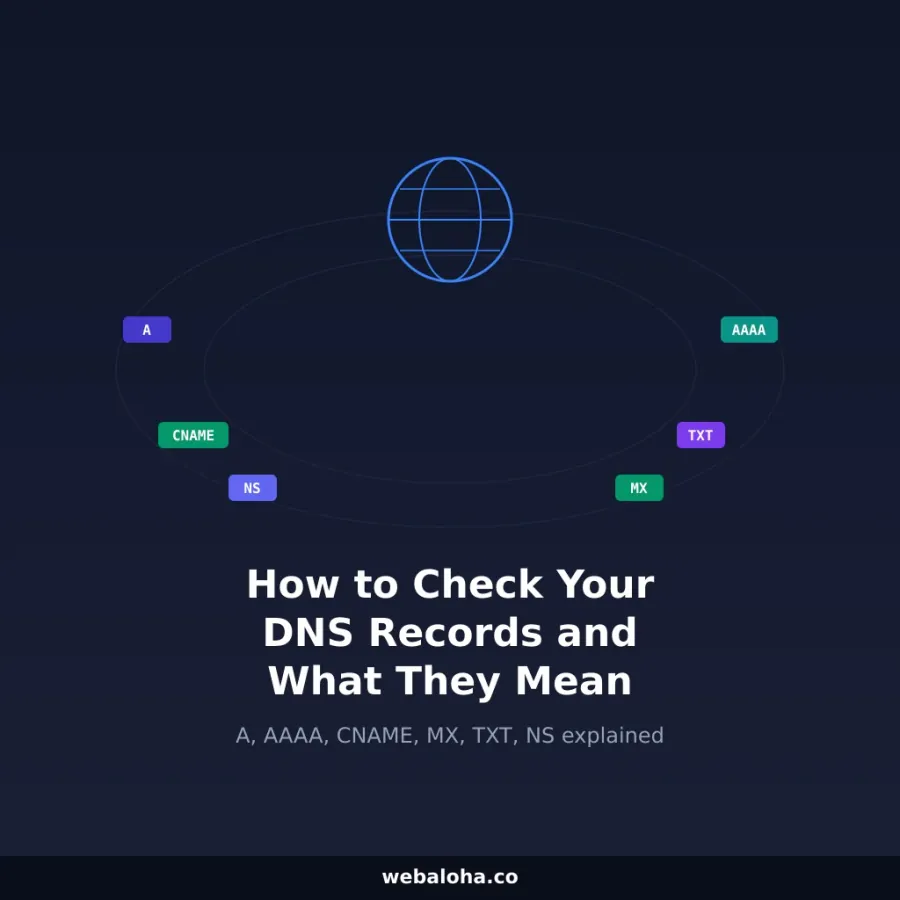
Common DNS Record Types
| Type | Used for | Launch risk |
|---|---|---|
| A | Points a domain to an IPv4 address. | Wrong value can send traffic to the wrong server. |
| CNAME | Aliases one hostname to another. | Common for Vercel and CDN connections. |
| MX | Controls mail delivery. | Wrong value can stop email. |
| TXT | Stores SPF, DKIM, DMARC, verification, and policy values. | Mistakes can affect email and platform verification. |
| NS | Identifies authoritative nameservers. | Nameserver changes often take longest to stabilize. |
For a single resolver view, use the DNS Lookup Tool.
DNS TTL & Propagation Reference
Propagation takes time because of caching. Every DNS record carries a TTL (time to live), the number of seconds a resolver may keep a cached copy before fetching a fresh answer. When you change a record, resolvers that already cached the old value keep serving it until their TTL expires, which is why different resolvers can show different answers during a change window. Lower TTLs propagate faster; nameserver changes are slowest because the parent zone often uses TTLs measured in days. The table below shows typical TTLs and what to expect.
| Record / scenario | Typical TTL | Propagation note |
|---|---|---|
| A / AAAA | 300 to 3600 sec (5 min to 1 hr) | Updates within minutes to an hour once caches expire. Lower the TTL before a migration for a faster cutover. |
| CNAME | 300 to 3600 sec | Behaves like A/AAAA. Common for CDN and platform connections, where providers often suggest a specific TTL. |
| MX | 3600 to 86400 sec (1 to 24 hr) | Often higher because mail routing changes rarely. Lower it ahead of an email provider switch to avoid delivery gaps. |
| TXT (SPF/DKIM/DMARC) | 3600 sec (1 hr) | Plan an hour for verification and policy changes to be seen consistently across resolvers. |
| NS (nameservers) | 86400 to 172800 sec (1 to 2 days) | Slowest to change. The parent zone publishes long TTLs, so a nameserver switch can take 24 to 48 hours to fully settle. |
| Lowered TTL before a change | 60 to 300 sec (1 to 5 min) | Set this in advance, then wait one old-TTL window before the real edit so resolvers refresh quickly at cutover. |
Planning a launch or migration where DNS, SSL, and email records all change at once? Our website maintenance services handle the cutover so traffic and inboxes never break.
Next steps
DNS Propagation Checker related tools and articles
Continue with the closest follow-up checks and guides based on this tool's topic, crawl intent, and optimization workflow.



DNS Propagation Checker: FAQ
Which resolvers and record types does this propagation check use?
What does Consistent mean in this report?
Why can all three resolvers return no records?
Why do the three resolvers show different values?
What input format does the tool accept?
How should I plan a DNS change for faster convergence?
Does this replace an authoritative DNS check?
What data is sent during a propagation check?
Free Website Audit
Not sure what to fix first on your own website? We'll review it and tell you, in plain English, within 48 hours. Free and non-obligatory.
Need DNS Launch Support?
We handle DNS, redirects, SSL, email records, and Vercel go-live checks so site launches do not break traffic or inboxes.