
Domain Hosting Checker
Last updated:
Find out where any domain is hosted. We resolve the IP, read the reverse DNS and ASN, and identify the hosting provider, DNS provider, and mail provider in one clean report.
Enter a domain to check hosting:
We handle this
Security findings like these are what we monitor daily.
Our maintenance plans keep an eye on SSL, headers, DNS, uptime, and backups so you never have to think about it. From $49/mo.
All good, today. Who’s watching tomorrow?
Sites drift: certificates expire, DNS changes, software ages. Our maintenance plans watch it all, from $49/mo.
More options Send us this result or get a copy by email
How the Checker Works
- Resolve the domain, A and AAAA records reveal the server IP.
- Look up the network, ASN and organisation identify the host.
- Read DNS and mail, nameservers and MX records are parsed.
- Summarise, you get host, DNS, and mail providers at a glance.
Why It Matters
- Migration planning, know the current setup before you move.
- Competitor research, see what infrastructure others use.
- Troubleshooting, confirm where requests actually land.
- Verification, check that a move or DNS change took effect.
Untangling hosting, DNS, and mail across providers can get messy fast. Our website maintenance services consolidate and document your setup so moves and fixes stay clean.
DNS Record Types Reference
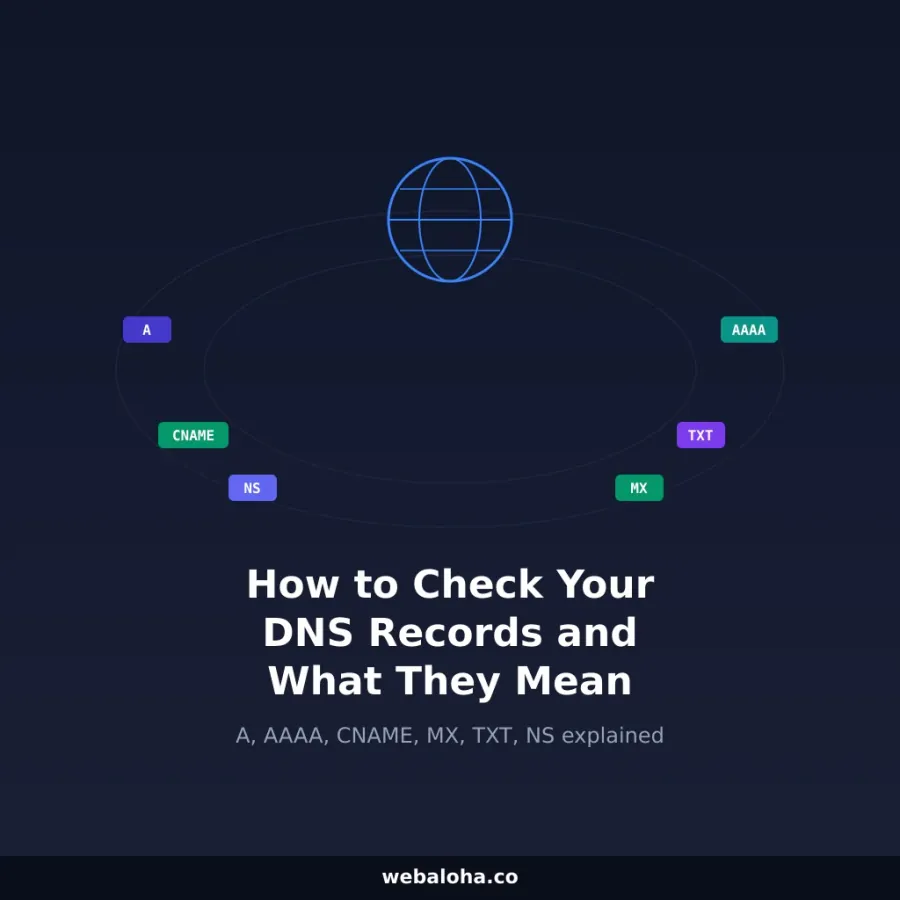
A hosting lookup reads several DNS record types to piece together where a domain lives. Here is what each record does and a typical example value, so you can read the results with confidence.
| Record | Purpose | Example |
|---|---|---|
| A | Maps a hostname to an IPv4 address, the server that answers web requests. | 93.184.216.34 |
| AAAA | Maps a hostname to an IPv6 address, the IPv6 equivalent of an A record. | 2606:2800:220:1:248:1893:25c8:1946 |
| CNAME | Aliases one hostname to another, common for CDNs and platform connections. | www → example.com |
| MX | Lists the mail servers that accept email for the domain, with a priority value. | 10 mail.example.com |
| TXT | Holds text values such as SPF, DKIM, DMARC, and domain verification tokens. | v=spf1 include:_spf.example.com ~all |
| NS | Names the authoritative nameservers, which reveal the DNS provider. | ns1.example-dns.com |
| SOA | Start of Authority, holds zone metadata such as the primary nameserver and serial. | ns1.example-dns.com hostmaster.example.com |
| CAA | Specifies which certificate authorities may issue SSL certificates for the domain. | 0 issue "letsencrypt.org" |
Next steps
Domain Hosting Checker related tools and articles
Continue with the closest follow-up checks and guides based on this tool's topic, crawl intent, and optimization workflow.


Domain Hosting Checker: FAQ
What does the Domain Hosting Checker return?
How is the hosting organization identified?
Why does the result show a CDN instead of the origin host?
How are DNS and mail providers inferred?
Why are multiple IPs listed but details describe only one?
Why can reverse DNS be blank?
What should I verify before using this result for a migration?
What data is sent during a hosting lookup?
Free Website Audit
Not sure what to fix first on your own website? We'll review it and tell you, in plain English, within 48 hours. Free and non-obligatory.
Planning a Migration or Hosting Move?
We move sites to fast, reliable infrastructure with zero downtime and clean DNS cutover.