SEO copywriting is not about stuffing keywords into paragraphs and hoping for the best. It is about understanding exactly what a searcher wants, then writing content that delivers it better than anyone else on page one.
This guide covers every major step in the SEO copywriting process, from search intent analysis through to final optimization checks. Use it as a repeatable system for every piece of content you publish.
If you want a quick audit of your existing pages first, start with the On-Page SEO Checklist for 2026.
What Is SEO Copywriting?
SEO copywriting is the practice of writing web content that is optimized for search engines and written for human readers at the same time. It is not one or the other.
Bad SEO writing sacrifices readability for keyword density. Good SEO writing does not feel like SEO writing at all. It feels like the most useful, clearest thing you have ever read on a topic.
In 2026, that bar is even higher. Google rewards content that demonstrates first-hand experience, topical depth, and genuine usefulness. AI search engines like Perplexity and ChatGPT cite content that is structured for direct answers. The techniques that win in traditional search are largely the same ones that earn AI citations.
Step 1: Match Search Intent Before You Write a Word
Search intent is the single most important factor in SEO copywriting. If your content type does not match what the searcher actually wants, the rest of your optimization will not save you.
There are four types of search intent:
| Intent Type | What the Searcher Wants | Best Content Format |
|---|---|---|
| Informational | Learn something | Blog post, guide, tutorial |
| Navigational | Find a specific site or page | Branded landing page |
| Commercial | Compare options before buying | Comparison, review, listicle |
| Transactional | Take action (buy, contact, sign up) | Service page, landing page with CTA |
How to identify intent: Search your target keyword in Google and look at what is already ranking. If the top results are all blog posts, Google has determined this is an informational query. If they are product pages, it is transactional. Match the format.
A transactional keyword needs a landing page, not a 2,000-word guide. An informational keyword needs depth and structure, not a one-page pitch.
Before writing, check what competitors are already ranking for that intent. A full SEO competitor analysis reveals which formats and topics Google is already rewarding on page one for your target keyword.
Start your keyword planning with the Keyword Generator to surface related terms alongside their likely intent.
Step 2: Keyword Research and Placement Strategy
Keyword placement is about putting the right terms in the right locations, not about hitting a density percentage. Keyword density as a metric is obsolete. What matters is that search engines and readers can immediately understand what your page is about.
Where to Place Your Primary Keyword
- H1 (page title): Include the primary keyword, ideally near the beginning
- First paragraph: Use the keyword naturally within the first 100 words
- At least one H2: Signals to Google that the keyword is a core topic of the page
- Meta description: Helps reinforce relevance and can influence click-through rate
- URL slug: Short, descriptive, keyword-included (e.g.,
/seo-copywriting-guide/)
How to Use Related Keywords
Modern search engines understand semantic relationships between words. You do not need to repeat the exact keyword phrase. You need to cover the topic thoroughly.
Use the Keyword Extractor on top-ranking pages to surface repeated words and phrases, then review their headings and passages yourself to identify relevant subtopics and questions. Frequency is evidence about the sampled page, not proof that a term is important or that your content should include it.
Related terms to cover for an SEO copywriting article include: content optimization, search intent, readability, heading structure, keyword placement, featured snippets, meta descriptions, E-E-A-T, and internal linking.
For a deeper dive into the research stage, read the full guide on how to do keyword research.
Step 3: Write a Headline That Wins the Click
Your title tag and H1 do two jobs: tell search engines what the page is about, and convince searchers to click instead of scrolling past.
Title tag best practices:
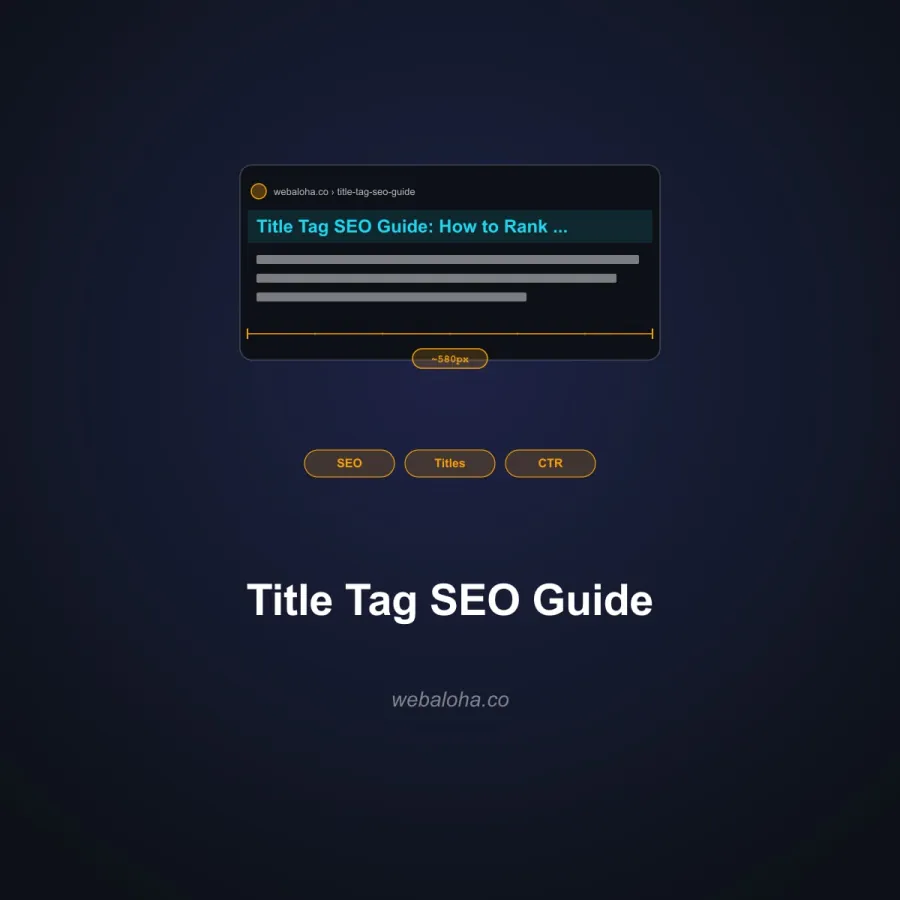
- 50 to 60 characters (check the preview in the SERP Preview Simulator)
- Primary keyword near the front
- Clear benefit or differentiation (“Guide,” “Checklist,” “2026,” “For Small Businesses”)
- Unique, not a copy of a competitor’s title
What not to do:
- Do not pad titles with the brand name mid-sentence
- Do not write clickbait that the content does not deliver
- Do not use the same title tag on multiple pages
A good title communicates exactly what the page covers. “How to Write Content That Ranks: SEO Copywriting Guide” tells the reader what they will get and signals the topic clearly.
Check your meta title and description setup with the Meta Tags That Actually Matter for SEO guide.
Step 4: Hook the Reader in the First 100 Words
Most visitors decide whether to stay or leave within a few seconds. Your introduction needs to confirm to the reader that they are in the right place and that reading further is worth their time.
The formula:
- Acknowledge the problem or question the searcher has
- State what the page will give them
- Optionally, state who this is for
Do not open with “In today’s digital landscape…” or a long preamble. Get to the point in the first sentence. The introduction above does exactly this.
What to avoid:
- Repeating the title verbatim as the first sentence
- Promising something you do not deliver
- Long definitions before getting to the practical content
Step 5: Structure Your Content for Scanners and Crawlers
Most readers scan before they read. They look at headings, bullet points, and bold text to decide which sections are relevant to them. Structure that works for scanners also works for search engine crawlers.
Heading Structure
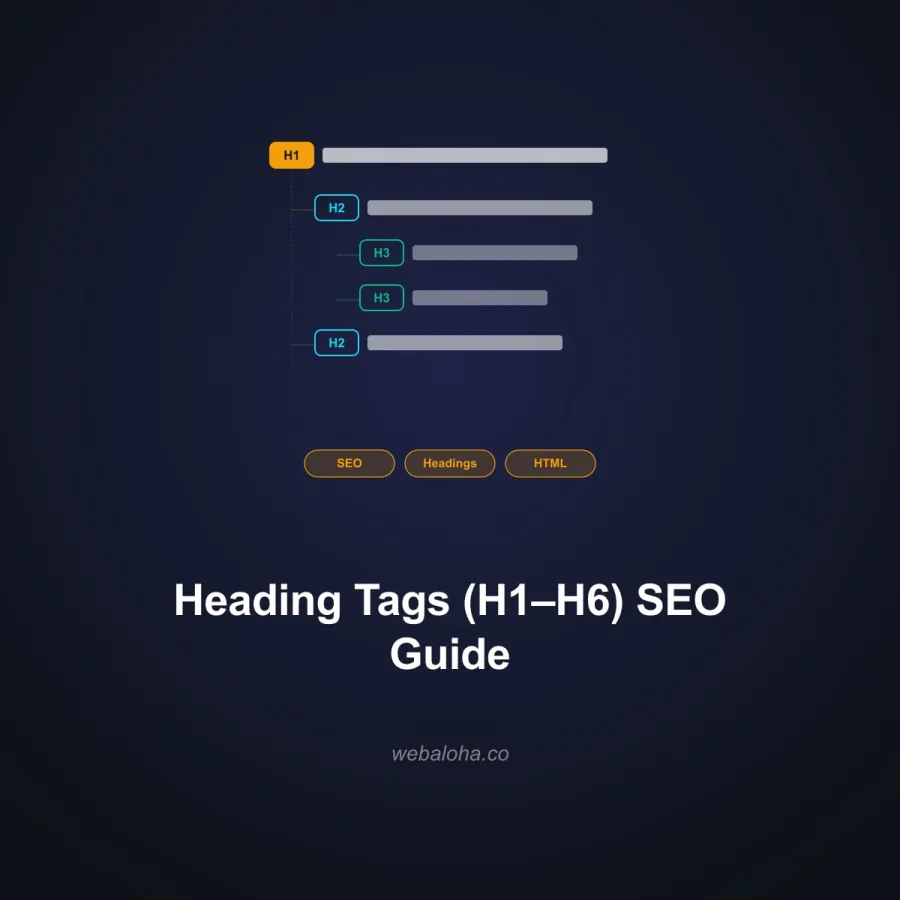
Use one H1 per page. Use H2 for major sections. Use H3 for subsections within those sections. Do not skip levels. Do not use headings just to make text bigger.
Check your heading hierarchy with the Heading Checker before publishing.
Good heading structure signals:
- The page covers multiple distinct subtopics
- The content is organized and navigable
- Crawlers can understand the page outline without reading full paragraphs
Paragraph Length and Readability
Keep paragraphs to 2 to 4 sentences for most body content. Online readers are not reading books. Long unbroken paragraphs lose people.
Use bullet lists and numbered lists when presenting multiple items of equal weight or sequential steps. Do not use bullets for everything, but do use them where they genuinely help.
Before and After: Content Optimization Example
Content Optimization: Before vs. After
Before (Unoptimized)
Heading: Search Engine Optimization Tips
Intro: In today’s digital landscape, search engine optimization is more important than ever for businesses of all sizes looking to increase their online visibility and attract more customers to their websites through organic search traffic from Google and other major search engines…
- ✗ Keyword buried in para 3
- ✗ No clear answer to search query
- ✗ One wall-of-text paragraph
- ✗ Generic, vague heading
After (Optimized)
Heading: How to Write Content That Ranks: SEO Copywriting Guide
Intro: SEO copywriting is not about stuffing keywords into paragraphs. It is about understanding what a searcher wants, then writing content that delivers it better than anyone on page one.
- ✓ Primary keyword in H1 and first sentence
- ✓ Direct answer to the search query
- ✓ Short, scannable paragraph
- ✓ Specific, benefit-driven heading
Step 6: Optimize for Featured Snippets and AI Citations
Featured snippets appear above organic results. AI search engines pull from well-structured, clearly worded content. Clear structure helps readers; neither feature has a guaranteed writing formula.
How to Target Featured Snippets
Featured snippets come in three formats: paragraph, list, and table. To target them:
Paragraph snippets: Write a concise, sufficient answer (40 to 60 words can be a drafting starting point, not an eligibility rule) directly after an H2 or H3 that mirrors the question. Google often pulls this block as the snippet.
List snippets: Use a numbered or bulleted list under a heading that starts with “How to,” “Steps to,” or “Best [X] for [Y].”
Table snippets: Use a properly formatted HTML or Markdown table with clear column headers for comparison or data-heavy content.
How to Write for AI Citations
AI search engines like Google AI Overviews, ChatGPT, and Perplexity use content that is:
- Structured with clear headings and subheadings
- Written in concise, direct sentences
- Backed by specific data, examples, or clear reasoning
- From a credible, authoritative source
Some useful writing practices overlap, although the selection systems and outputs differ. Structure your most important answers as short, self-contained blocks that can be extracted from the page without losing meaning.
Accurate schema describes visible facts but does not guarantee AI visibility. The schema evidence guide explains supported features and the limits of citation claims.
For a deeper look at this, read how to optimize content for AI citations.
Step 7: Demonstrate E-E-A-T Throughout
E-E-A-T stands for Experience, Expertise, Authoritativeness, and Trustworthiness. It is how Google evaluates whether your content should be trusted.
This is not a single technical optimization. It is woven through the entire content:
- Experience: Share first-hand observations, client examples, or real data. “In our experience working with 50+ small business sites…” signals experience.
- Expertise: Explain the why behind recommendations, not just the what. Demonstrate you understand the subject deeply.
- Authoritativeness: Cite credible sources. Link to related content that reinforces topical depth.
- Trustworthiness: Be accurate. Correct errors. Do not make claims you cannot back up.
One of the fastest ways to undermine E-E-A-T is to write content that contradicts itself, makes vague claims, or copies what everyone else says without adding original thinking.
For a detailed guide on what each signal means and how to build it into your pages, read E-E-A-T: what it is and how to prove expertise.
Step 8: Internal Linking as a Ranking Signal
Internal links are one of the most underutilized SEO tools. They distribute authority across your site, help crawlers discover and prioritize your content, and keep readers engaged longer.
Internal linking best practices:
- Link to relevant content, not just anything on your site
- Use descriptive anchor text that tells the reader (and Google) what the linked page is about
- Link from high-authority pages to pages you want to rank
- Do not use “click here” as anchor text
For example, if you are writing about SEO copywriting, linking to your On-Page SEO Checklist for 2026 and to meta tags guidance adds context and passes relevance signals to those pages.
Read the full guide on internal linking strategy for topic authority to understand how to build a site structure that boosts rankings across the board.
Internal links work alongside your external link profile. The off-page SEO and link building guide explains how to build authority from outside your site as well.
Step 9: The Technical On-Page Checklist
Before you publish, run through these technical elements:
Meta description:
- 140 to 160 characters
- Includes primary keyword
- Reads like a reason to click, not a page summary
- Unique per page
URL:
- Short and descriptive
- Primary keyword included
- No stop words or special characters
- Example:
/seo-copywriting-guide/not/blog/post-2943-how-to-write-seo-content-for-websites/
Images:
- Descriptive filenames (not
IMG_4829.jpg) - Alt text that describes the image and includes the keyword where natural
- Compressed for speed
- See the full Image SEO Guide for image optimization details
Word count check:
- Use the Website Word Counter to compare your content length against what is ranking
Step 10: Content Scoring Rubric
This is an editorial review rubric, not a validated ranking or AI citation model. A score can organize discussion but cannot predict search outcomes.
| Element | Points | What to Check |
|---|---|---|
| Search intent match | 10 | Content type matches what is ranking on page 1 |
| Keyword in H1 and first paragraph | 8 | Primary keyword appears in both locations naturally |
| Heading structure (H2/H3) | 6 | Logical hierarchy, keywords in at least 2 H2s |
| Topic depth and completeness | 8 | Covers subtopics competitors cover, plus something extra |
| E-E-A-T signals | 6 | First-hand examples, credible citations, author expertise |
| Meta title and description | 4 | Unique, correct length, keyword-included, compelling |
| Internal links (3-5) | 4 | Relevant anchor text linking to related pages |
| Featured snippet optimization | 4 | At least one direct answer block, list, or table |
| Images with alt text | 3 | All images descriptively labeled and compressed |
| Readability (paragraphs, lists) | 3 | Short paragraphs, lists where useful, no walls of text |
| Total possible | 56 | Aim for 40+ before publishing |
Common SEO Copywriting Mistakes to Avoid
Most content that fails to rank makes the same predictable errors:
Writing for keyword density, not readers. Repeating a keyword phrase 15 times does not help rankings. It hurts readability and Google can detect it. Natural variation is correct.
Ignoring the competition. Before writing, look at what is ranking on page one. Not to copy it, but to understand what depth and format Google has decided this topic deserves.
Thin introductions. If your first 200 words are filler, you are training readers to scroll or leave. Every paragraph needs to earn its place.
No internal linking. Every piece of content you publish should link to and receive links from related content. Orphan pages struggle to rank.
Publishing and forgetting. A page that ranked in 2024 may need a refresh in 2026. Update statistics, improve thin sections, and add new internal links as your content library grows.
SEO Copywriting and GEO: Writing for Both Search Engines and AI
SEO and GEO both aim to improve discovery, but neither guarantees rankings or citations. Their results require separate observation.
Clear structure, direct answers and attributable evidence help readers evaluate a page. They do not establish that a ranking or citation was caused by any one writing technique.
For a side-by-side look at how the two approaches differ in ranking behavior, read AI search vs. traditional SEO.
The one area where they diverge: AI systems favor content that is structured for extraction. This means:
- Short, self-contained answer blocks under clear headings
- Factual, specific claims (not vague generalizations)
- Content that can be read out of context and still make sense
For a full breakdown of the AI-specific optimization techniques, read how to optimize content for AI citations.
If you want help building a content strategy that works across both traditional and AI search, the SEO Services page covers what we do and how we approach it.
Want help creating content that ranks and earns AI citations? Web Aloha’s SEO Services cover content strategy, on-page optimization, and GEO. Get in touch to talk about your site.
A factual rewrite with a checkable source
Before: “Add an image to Article schema or Google will reject the markup.”
After: “Google recommends an image for Article markup, but its Article guide lists no required properties. Add a relevant image that accurately represents the article.”
The second version corrects the decision the reader would make, instead of adding a stronger claim or more keywords. Its source is Google’s Article documentation, checked October 2, 2026. For AI source observations, use the tested visibility tools study rather than assigning the rewrite an invented citation score.
Frequently asked questions
What is SEO copywriting?
SEO copywriting is the practice of writing content that satisfies both search engines and human readers. It combines keyword research, search intent matching, clear structure, and persuasive writing to create pages that rank well and convert visitors.
Where should I place keywords in my content?
Place your primary keyword in the page title (H1), first paragraph, at least one H2 subheading, the meta description, and the URL slug. Use related terms and synonyms naturally throughout the body. Avoid forcing the exact keyword phrase where it reads awkwardly.
How long should SEO content be?
Content should be as long as it needs to be to fully answer the query. For competitive informational keywords, 1,500 to 3,000 words is a common range for top-ranking pages. For transactional or local pages, 500 to 1,000 focused words often performs well. Never pad content just to hit a word count.
What is search intent and why does it matter for SEO?
Search intent is the underlying goal behind a search query. The four types are informational, navigational, commercial, and transactional. If your content type does not match the searcher's intent, you will not rank no matter how well optimized the page is. Intent alignment is the most important factor in SEO copywriting.
How do I optimize content for featured snippets?
To target featured snippets, identify questions your audience asks, then answer them directly in 40 to 60 words in a clearly labeled section. Use a short definition paragraph, a numbered list, or a table immediately after an H2 or H3 that mirrors the search query. Structured, concise answers win snippets.
What is keyword density and does it still matter?
Keyword density is the percentage of times a keyword appears relative to total word count. It does not matter as a metric in 2026. Modern search engines understand topic context and semantic relevance. Focus on covering the topic thoroughly with natural language rather than hitting any keyword percentage target.
How do I write an SEO title tag?
Write title tags that are 50 to 60 characters long, include your primary keyword near the front, and give the reader a reason to click. Avoid keyword stuffing. Each page needs a unique title tag. Use our SERP Preview Simulator to check how your title and description look in search results before publishing.
Should I write for AI search as well as Google?
Write accurate, useful answers for your audience and measure AI search when it matters to that audience. Clear structure is sound editorial practice, not a universal citation formula. Review time-sensitive facts when they change rather than changing dates on a fixed schedule.
How often should I update published content?
Review and update high-priority pages every 6 to 12 months. Refresh statistics, fix outdated information, strengthen thin sections, and add new internal links. Pages covering fast-moving topics like AI, marketing, or regulations may need updates every 3 to 6 months to stay relevant.
What is E-E-A-T and how does it affect my content?
E-E-A-T stands for Experience, Expertise, Authoritativeness, and Trustworthiness. It is Google's framework for evaluating content quality. To demonstrate E-E-A-T, include author credentials, cite reputable sources, share first-hand examples, and build a consistent track record of accurate, helpful content on your topic.