E-E-A-T is one of the most talked-about concepts in SEO, and one of the most misunderstood. If you have been told to “improve your E-E-A-T” without a clear explanation of what that means in practice, this guide is for you.
We will cover what each letter stands for, why Google cares about it, and exactly what you can do on your website today to signal credibility to both Google’s algorithms and the AI search engines that are increasingly shaping how people find businesses.
What Is E-E-A-T in SEO?
E-E-A-T stands for Experience, Expertise, Authoritativeness, and Trustworthiness. It is a quality evaluation framework taken directly from Google’s Search Quality Rater Guidelines, a document that Google’s contracted human evaluators use to assess whether search results are actually good.
Google employs thousands of Search Quality Raters worldwide. These people do not directly change your rankings. Instead, their evaluations help Google train and refine the machine learning models that do. Think of E-E-A-T as the standard your content is held against, even if you never see a numerical score.
The framework was originally called E-A-T. In December 2022, Google added a second E for Experience, acknowledging that first-hand, lived experience with a topic is a distinct quality signal, separate from formal credentials or expertise.
The Four Components of E-E-A-T
| Component | What It Means | Example Signals |
|---|---|---|
| Experience | Creator has direct, first-hand involvement with the topic | Original photos, personal anecdotes, case studies from real work, documented results |
| Expertise | Creator has deep knowledge, credentials, or training in the subject | Certifications, degrees, years of professional practice, recognized publications |
| Authoritativeness | The site or creator is recognized as a go-to source by others in the field | Backlinks from reputable sites, press mentions, industry awards, citations by peers |
| Trustworthiness | The site is safe, accurate, honest, and transparent about who runs it | HTTPS, visible contact info, clear privacy policy, accurate content, no deceptive claims |
Trust is the most important of the four. Google’s own guidelines state that a page with low trustworthiness has low E-E-A-T overall, regardless of how strong it is on the other three components. A site with impressive credentials that makes false claims still fails the test entirely.
Experience
Experience is about showing that you have actually done the thing, not just read about it.
A product review written by someone who bought and used an item for three months carries more weight than a roundup assembled from other reviews. A contractor whose site shows real project photos, real client results, and real job-site details carries more weight than one with stock images and generic copy.
You demonstrate experience with:
- Original photos, videos, and screenshots from your own work
- Personal case studies with real numbers and specific outcomes
- “Lessons learned” or “what worked” sections that only an insider would write
- Disclosing mistakes, challenges, and how you resolved them
Expertise
Expertise is the formal or demonstrated-knowledge side of the equation. For some topics, this means verifiable credentials. For others, it means depth and accuracy.
A doctor writing about medication dosages needs verifiable medical credentials. A self-taught web developer writing about CSS has expertise through demonstrated depth and accuracy, even without a degree. Google’s quality raters are instructed to evaluate whether the level of expertise shown is appropriate for the topic.
You demonstrate expertise with:
- Author bios that list qualifications, certifications, and years of relevant experience
- Content that goes deeper than what appears on the first page of search results
- Citing primary sources: research papers, official guidelines, original data
- Consistently accurate, well-researched content that earns positive reader behavior signals
Authoritativeness
Authoritativeness is largely an off-site signal. It is about whether credible sources in your space recognize you as worth citing.
You cannot manufacture authority by declaring yourself an expert. It has to be demonstrated through what others say and link to. This is where link building and brand mentions become a direct E-E-A-T strategy, not just a traffic play.
Running a competitor backlink analysis reveals which sites in your niche already link to similar content, giving you a prioritized list of outreach targets before you send a single email.
You build authority with:
- Earning backlinks from industry-relevant, high-quality sites
- Getting featured in trade publications, news outlets, or podcasts
- Having your work cited or referenced by peers and competitors
- Contributing original guest content to recognized platforms in your niche
Trustworthiness
Trust is the foundation that makes everything else matter. A site can have credentialed authors and industry backlinks, but if it feels unsafe or opaque, it fails the trust test.
Trust is also the component most directly in your control. Most core trust signals can be implemented quickly, without waiting for external validation.
Core trust signals include:
- HTTPS (non-negotiable in 2026)
- A clear About page with real people, names, and roles
- Working contact information including phone or email
- Visible privacy policy and terms of service
- No misleading headlines that the content does not deliver on
- Regular content updates with clear “last updated” dates
Why E-E-A-T Matters for Rankings and AI Search
Google’s people-first content guidance explains E-E-A-T and the role of quality raters. It is not a single ranking score. Raters evaluate search quality; their ratings do not directly change an individual page’s ranking.
Use the framework to review who created the content, how it was produced and why it helps the reader. Google gives particular attention to trust for topics affecting health, financial stability or safety. This does not establish that every AI service uses the same evaluation process.
What Is YMYL?
YMYL stands for “Your Money or Your Life.” These are topics where inaccurate information can cause real harm to real people. Examples include:
- Medical advice and health information
- Financial guidance (investments, loans, taxes, retirement)
- Legal advice and questions
- Safety-critical information
- News reporting on significant current events
If your site touches any YMYL area, Google holds your content to a higher E-E-A-T bar. A personal finance blog needs more than good writing. It needs credentialed authors, sourced claims, a transparent editorial review process, and clear disclosure of any conflicts of interest.
Even if your business is not YMYL, understanding the standard sets a useful quality benchmark for all your content.
How to Prove E-E-A-T: Practical Steps by Signal
1. Author Bios That Actually Work
Most author bios are useless for E-E-A-T purposes. “Jane is a writer who loves coffee and travel” tells Google nothing about why Jane is qualified to give advice on the topic she just wrote about.
A high-E-E-A-T author bio includes:
- Full name and professional title
- Specific credentials relevant to the topic (certifications, licenses, degrees)
- Years of experience in the relevant field
- Links to external profiles (LinkedIn, professional association pages, published work)
- A real headshot (not a stock photo or illustration)
- A link to an author archive page listing their other published pieces
For YMYL content, also include a “reviewed by” line showing the reviewer’s name, credentials, and the date of their review. This mirrors the editorial standards of medical and financial publishers that Google treats as high-quality sources.
2. Schema Markup for Machine-Readable Credibility
Schema markup can explicitly describe authors and organizations for compatible systems. It does not verify expertise or create an E-E-A-T score. Prioritize accurate visible evidence and then reflect it in the markup.
The most important schema types for E-E-A-T are:
- Person schema on author and team pages, with
sameAslinks to LinkedIn and professional profiles - Organization schema on your homepage and About page, with
sameAslinks to your Google Business Profile, social accounts, and industry directories - Article schema on every blog post, with
authoranddateModifiedfields correctly populated - FAQPage schema is optional for visible FAQs; Google retired FAQ rich results in May 2026
You can validate your existing markup with the Schema Markup Validator and build new structured data using the Schema Markup Generator. For a deeper look at what schema does and why it matters for both traditional SEO and AI visibility, see our full guide to schema markup and SEO.
The sameAs property deserves particular attention. By linking your author or organization entities to external profiles that are independently verifiable, you create a web of consistent identity signals that Google can cross-reference. A Person entity that links to a LinkedIn profile with 15 years of documented work history carries substantially more weight than a standalone name on a page with no external validation.
3. On-Page Content Signals
Your content itself carries E-E-A-T signals through its structure and substance. Thin, generic, could-have-been-written-by-anyone content is the fastest way to signal low E-E-A-T.
High-E-E-A-T content characteristics:
- Goes deeper than what appears in the top five existing results on the same topic
- Includes specific data, statistics, and named examples with context
- Cites primary sources rather than just other blog posts
- Gives concrete, actionable recommendations, not just general observations
- Discloses limitations or nuances that a less-experienced author would likely miss
When writing for E-E-A-T, treat each page like an answer that a qualified expert would give to someone who genuinely needed help. Pairing E-E-A-T improvements with on-page SEO fundamentals produces the strongest combined results.
4. Your About Page and Team Page
If a human quality rater visited your site and could not figure out who runs it or what qualifies them, that is a direct E-E-A-T problem.
Your About page should:
- Name the people behind the business
- Describe their relevant experience and credentials specifically
- Explain the organization’s approach and mission
- Include real photos of actual team members (not stock images)
- Link to the company’s presence on external platforms
If you are a solo operator, this matters even more. Your personal credibility is the site’s credibility. Do not hide behind a generic brand voice when your background is genuinely relevant to the content you publish. For local businesses, a well-optimized About page also anchors the local SEO presence that directories and Google Business Profile rely on to verify your location.
5. Build Off-Site Authority
Authoritativeness cannot be manufactured entirely on your own site. It is earned off-site through what credible others say about you.
Practical ways to build off-site authority:
- Contribute original insights to industry publications, newsletters, or podcasts
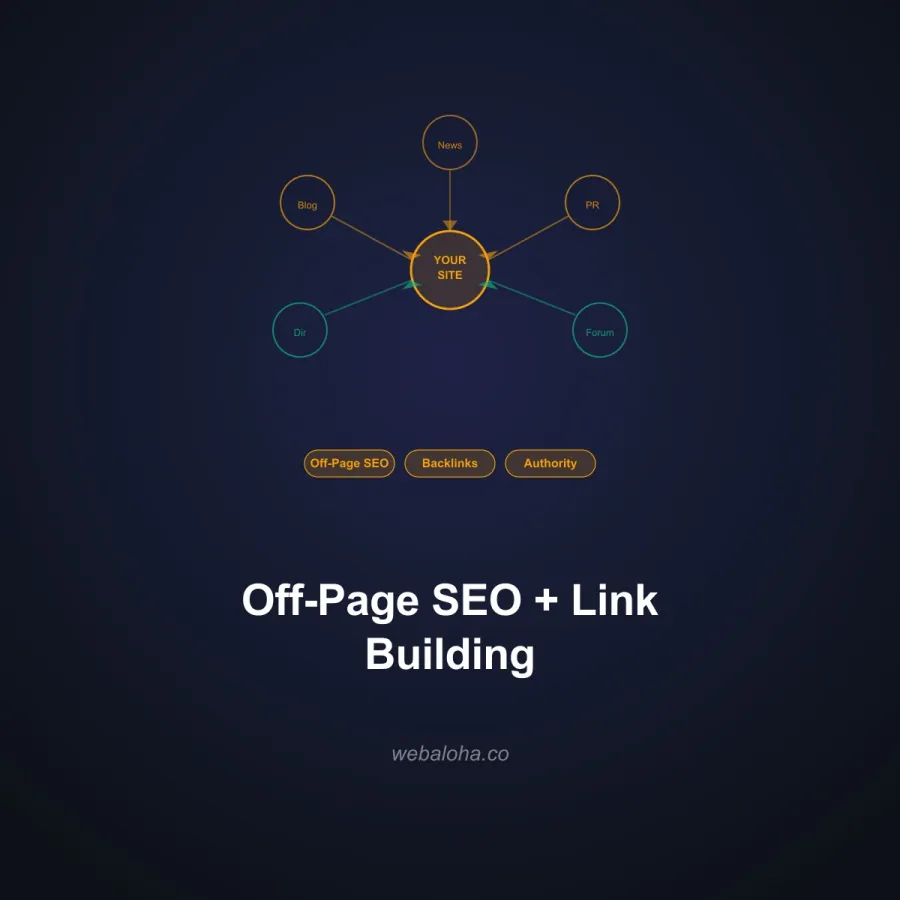
- Pursue link building from relevant, reputable sites in your niche
- Maintain a detailed, complete Google Business Profile
- Earn and respond to reviews on Google, Yelp, and industry-specific directories
- Get listed in authoritative industry directories and professional associations
- Seek press coverage or mentions in local news or trade publications
Each of these builds a trail of third-party validation that reinforces the expertise and authority signals on your own site. This is the core of what our SEO Services focus on for clients trying to build durable rankings.
6. Technical Trust Signals
Technical SEO and E-E-A-T overlap more than most guides acknowledge. A full technical SEO audit will surface several trust-related issues worth fixing:
- HTTPS is a baseline trust requirement across all content types
- Accessible contact information (not buried in a footer with no dedicated contact page)
- Fast, mobile-friendly pages signal a professionally maintained site
- No broken links to non-existent or outdated pages
- Clear navigation that makes your site structure predictable
- Visible last-updated dates on content so readers can gauge freshness
A clean, well-maintained site sends implicit trust signals before anyone reads a word of content. A cluttered, slow, or broken site undermines even the strongest author credentials. Regularly reviewing Google Search Console for crawl errors, manual actions, and security issues is one of the simplest ways to demonstrate active site stewardship.
E-E-A-T Signals by Page Type
Different pages on your site carry different E-E-A-T responsibilities. The table below maps the most important signals to common page types:
| Page Type | Primary E-E-A-T Focus | Must-Have Signals |
|---|---|---|
| Homepage | Trust + Authority | Organization schema, HTTPS, clear navigation, contact info, social proof, real photos |
| About Page | Expertise + Trust | Real team bios, credentials, Person schema, links to external profiles |
| Blog / Articles | Experience + Expertise | Detailed author bio, Article schema, sources cited, last updated date, original observations |
| Service Pages | Authority + Trust | Case studies or client results, credentials, reviews, clear scope and pricing information |
| Product / Review Pages | Experience + Trust | First-hand testing evidence, specific observations, verified reviews, Product schema |
| YMYL Pages | All four components | Credentialed author, expert reviewer, citations, visible date, editorial policy, disclaimers |
Low E-E-A-T vs High E-E-A-T: Side by Side
The difference between a weak page and a strong one often comes down to a dozen concrete choices. Here is what each looks like in practice:
| Element | Low E-E-A-T | High E-E-A-T |
|---|---|---|
| Author attribution | ”Staff Writer” or no byline | Full name, credentials, linked author page |
| About page | Generic brand description, no names | Named team, real bios, photos, credentials |
| Sources and citations | No citations, vague unverified claims | Linked primary sources, data cited in context |
| Contact info | No contact page, anonymous form only | Phone, email, address, business hours |
| Content depth | Broad overview, nothing original or new | Specific, first-hand, actionable, backed by evidence |
| Schema markup | None or incomplete | Person, Organization, Article, and FAQ schema |
| Content freshness | No update dates, outdated statistics | Visible “last updated” date, current data throughout |
| External recognition | No backlinks, no third-party mentions | Industry backlinks, press mentions, directory listings |
E-E-A-T and AI Search Visibility
Good authorship and sourced explanations help readers evaluate content. A provider may use retrieved pages when generating an answer, but we should not turn that possibility into a claim that it verifies every credential, parses every schema block or uses Google’s rater framework.
Our schema evidence guide and tested AI visibility tools comparison distinguish documented features, technical readiness and observed citations.
For a full breakdown of how AI search platforms select sources, see our guides on brand mentions and entity SEO for AI visibility and optimizing content to earn AI citations.
You can review public crawler and page-readiness signals with the AI Search Visibility Checker. Measure actual brand mentions and citations separately with a repeatable prompt sample.
E-E-A-T Action Plan for Small Business Owners
If you are a small business owner thinking this feels overwhelming, here is a prioritized starting point built around what moves the needle fastest.
Week 1: Fix the trust foundations
- Confirm HTTPS is active across your entire site (contact your host if unsure)
- Create or rewrite your About page with real names, real photos, and specific bios
- Add a dedicated contact page with phone, email, and address where applicable
- Add a privacy policy if one does not exist
Week 2: Upgrade your content credibility
- Add author bios to every blog post, with credentials and links to external profiles
- Add visible “last updated” dates to your main content pages
- Add at least one original piece of evidence to each key page: a client photo, a real result, a specific case study
- Cite at least one primary source per article with an outbound link
Week 3: Implement schema markup
- Add Organization schema to your homepage with
sameAslinks to your social and directory profiles - Add Person schema to your author and team pages
- Add Article schema to blog posts with the
authoranddateModifiedfields filled in - Validate everything with the Schema Markup Validator and generate any missing markup with the Schema Markup Generator
Month 2 onward: Build authority
- Start pursuing backlinks through guest contributions or original research others will cite
- Get listed in relevant professional directories and industry associations
- Ask satisfied clients for reviews on Google and relevant industry platforms
- Respond to all reviews, positive and negative, to show active management
Running E-E-A-T improvements in parallel with keyword research and a strong internal linking structure produces compounding results. E-E-A-T makes your content worth ranking. Keywords and internal links help Google find and understand it.
For businesses building out a complete site presence, web design that is structured for trust and credibility from the ground up makes every E-E-A-T improvement more effective. A site that looks legitimate and is easy to navigate sets the right context before a quality rater or AI engine ever reads a word.
If you are working on a broader SEO for small business strategy, E-E-A-T should be one of the first pillars you build, not an afterthought added after the rest is done. And if you want to write content that ranks consistently, our SEO copywriting guide walks through how to integrate E-E-A-T signals into your writing process from the start.
Building strong E-E-A-T signals is not a one-time task. It is an ongoing investment in your site’s credibility, one that pays dividends in both traditional search rankings and AI-powered visibility.
If you want hands-on help auditing your current E-E-A-T signals and building a strategy that moves the needle, our SEO Services cover exactly this, from technical trust signals to content improvements to authority building. Get in touch to talk through what your site needs.
Frequently asked questions
What is E-E-A-T in SEO?
E-E-A-T stands for Experience, Expertise, Authoritativeness, and Trustworthiness. It is a framework from Google's Search Quality Rater Guidelines that human evaluators use to assess content quality. While not a direct ranking factor, it shapes the algorithms that determine search rankings.
Is E-E-A-T a direct ranking factor?
No. E-E-A-T is not a score that Google's algorithm calculates directly. It is a framework used by human quality raters to evaluate content, and their assessments help train the algorithms that affect rankings. Optimizing for E-E-A-T indirectly but measurably improves your search performance.
What is the difference between E-A-T and E-E-A-T?
Google's original framework was E-A-T (Expertise, Authoritativeness, Trustworthiness). In December 2022, Google added a second E for Experience, recognizing that first-hand, lived experience with a topic is a distinct quality signal. A financial blogger with personal investing experience now signals more credibility than one without it.
What is YMYL and why does it affect E-E-A-T requirements?
YMYL stands for 'Your Money or Your Life.' These are topics where bad information can seriously harm people, such as health, finance, law, and safety. Google holds YMYL content to stricter E-E-A-T standards because the stakes are higher, requiring credentialed authors, sourced claims, and a transparent editorial process.
How do I prove experience to Google?
Prove experience by showing first-hand involvement with your topic. This includes original photos and videos, case studies from your own work, personal anecdotes, product reviews based on actual use, and data you collected yourself. Content that reads like it came from someone who has done the thing consistently outranks purely researched content.
What should an author bio include for E-E-A-T?
An effective author bio should include the author's full name, professional title, specific credentials and certifications relevant to the topic, years of experience, links to external profiles such as LinkedIn or professional association pages, and a real headshot. For YMYL content, also include a reviewer's name, credentials, and a review date.
How does schema markup help with E-E-A-T?
Schema markup helps search engines and AI systems understand who wrote your content, what your organization does, and how it connects to trusted external entities. Person schema for authors, Organization schema for your business, and Article schema with correct author and date fields collectively build a machine-readable trust profile for your site.
Does E-E-A-T apply to small business websites?
Yes. Small business sites are not held to the same strict standard as large YMYL publishers, but E-E-A-T still matters for all content. A local contractor who shows real project photos, includes genuine team bios, and has consistent reviews across Google and industry directories will outrank a thin, anonymous competitor site.
How does E-E-A-T affect AI search visibility?
E-E-A-T is a Google quality evaluation framework, not a universal AI citation score. Clear authorship and reliable evidence help readers assess content. Major platforms do not publish one citation formula based on schema, credentials and brand mentions.
How long does it take for E-E-A-T improvements to affect rankings?
There is no fixed time to an E-E-A-T ranking effect. Record the actual author, evidence and content changes, then assess indexing and relevant search outcomes over suitable periods. Those observations do not isolate a single E-E-A-T score or cause.