Off-page SEO is the part of search engine optimization that happens outside your website. It is about convincing the rest of the internet that your content is worth ranking. And in 2026, despite all the changes in how Google works, the core signal remains the same: backlinks from real, relevant, trustworthy websites.
Before you focus on link building, make sure your on-page SEO checklist for 2026 is solid. Links to a poorly optimized page deliver a fraction of the benefit they would to a well-structured one.
This guide covers every link building strategy that still works, what to avoid, and how to prioritize your effort as a small-to-medium business.
Why Backlinks Still Matter in 2026
Some people predicted that backlinks would become irrelevant as AI search grew. That has not happened.
Links are used by search engines for discovery and ranking analysis, but a backlink count does not establish causation or a target quota. We do not apply old cross-site backlink averages as a forecast for your business. Follow Google’s link spam policy.
What has changed is the weight given to quality. Google’s spam filters have matured, AI-driven ranking systems understand topical context, and a handful of relevant editorial links now outperforms hundreds of low-quality ones.
For AI search, source selection varies by platform. A strong link profile does not guarantee citations, and an unlinked mention is not a documented substitute for a backlink. See the AI citation evidence guide.
What Makes a Backlink Valuable
Not all backlinks are equal. Understanding what separates a strong link from a weak one helps you focus your effort.
The five factors that determine backlink value:
- Topical relevance, A link from a site covering the same or closely related topics is worth far more than a link from an unrelated high-authority site. Relevance signals to Google that real people in your space are vouching for you.
- Domain authority, Links from established sites with real traffic and editorial standards carry more link equity than links from new or low-traffic sites.
- Page authority, A link from a well-linked page within a strong domain carries more value than a link from a weak page on that same domain.
- Anchor text, Descriptive anchor text (the clickable words) helps Google understand what your page is about. Natural variation in anchor text looks more organic and reduces over-optimization risk.
- Link placement, Links embedded naturally in body content carry more weight than footer links, sidebar links, or links in boilerplate text.
One strong link from a respected industry publication will do more for your rankings than fifty links from random directories. Keep this in mind as you evaluate every opportunity. Structured authority signals, including schema markup and SEO entity data, reinforce the trust that strong backlinks build.
Link Building Tactics: A Comparison
| Tactic | Effort | Link Quality | Risk | Best For |
|---|---|---|---|---|
| Digital PR / Original Research | High | Very High | None | All businesses |
| Guest Posting (quality sites) | Medium to High | High | Low | Service businesses, B2B |
| Broken Link Building | Medium | High | None | Any site with good content |
| Resource Page Outreach | Medium | High | None | Sites with useful tools/guides |
| HARO / Journalist Outreach | Medium | Very High | None | Founders, subject experts |
| Podcast Appearances | Low to Medium | Medium to High | None | Thought leaders, agencies |
| Local Citations / Directories | Low | Medium | None | Local businesses |
| PBNs / Paid Link Schemes | Low (paid) | Artificial | Very High | Avoid entirely |
Strategy 1: Digital PR and Original Research
Digital PR is now rated the most effective link building tactic by SEO professionals surveyed in 2025. It involves creating genuinely newsworthy content and distributing it to journalists, editors, and publishers who cover your space.
The most link-worthy content types include:
- Original survey data or industry research
- Proprietary data analysis or trend reports
- Contrarian or surprising findings from your niche
- Visual assets (maps, charts, calculators) that publishers want to embed
- Expert commentary on breaking industry news
A single well-placed feature in a respected publication can generate the link equivalent of months of outreach. And because these are editorial links, they come with no risk of penalty.
How to start: Identify two or three questions your industry is asking that nobody has answered with real data. Survey your customers, analyze your own data, or run an experiment. Package the findings attractively and pitch it to relevant publications.
Strategy 2: Guest Posting on Relevant Sites
Guest posting still works when done correctly. The key word is “relevant.” A guest post on a topically related site with real editorial standards and genuine readership delivers strong results. A guest post on a link farm disguised as a blog does nothing (and risks a penalty).
What to look for in a guest post target:
- The site covers your topic or a closely adjacent one
- Articles are written by named authors with real bylines
- The site has actual organic traffic (check with Ahrefs or Semrush free tools)
- It has editorial guidelines and doesn’t accept every pitch it receives
- The existing content is useful and well-written
What to avoid:
- Sites that say “write for us” prominently in their navigation (often link farms)
- Sites with no identifiable authors or editorial team
- Sites that charge a fee to publish without disclosing it as sponsored content
- Sites clearly built for SEO purposes with thin, generic content
One good guest post per month on a relevant, respected site beats ten guest posts on low-quality blogs.
Strategy 3: Broken Link Building
Broken link building is one of the most efficient link acquisition tactics available. The process is simple: find links on other websites that go to pages that no longer exist, and offer your relevant content as a replacement.
Website owners want to fix broken links because dead links hurt user experience and their own SEO. A polite, helpful email offering a working replacement gets a much higher response rate than a cold link request.
Step-by-step:
- Identify websites in your niche that link out to external resources
- Use our Broken Link Checker to find broken outbound links on those pages
- Check whether you have (or can create) content that matches the dead page’s topic
- Send a short, helpful email: “Hey, I noticed this link on your page is broken. I wrote a similar guide that might be a good replacement.”
- Include the broken URL and your suggested URL so they can act immediately
Record your own delivered pitches, replies and editorial placements. Response rates vary by audience and method; no typical conversion percentage is assumed here.
Strategy 4: Resource Page Link Building
Resource pages are curated lists of useful links on a given topic. Think “Best SEO tools,” “Recommended reading for startup founders,” “Hawaii small business resources.” These pages exist on industry blogs, university sites, chambers of commerce, and professional associations.
If you have a genuinely useful guide, tool, or resource, getting it listed on a relevant resource page is a natural, editorial link with real topical value.
How to find resource pages:
- Search Google for:
[your topic] + "useful resources"or[your topic] + "recommended links"or[your topic] + inurl:resources - Look at who links to your top competitors’ best content. A competitor backlink analysis makes this systematic.
- Check professional association websites in your industry
Pitch with one sentence explaining what your resource covers and why it belongs on their list. Keep it short. Website owners deciding on a resource page addition don’t need a sales pitch.
Strategy 5: HARO and Journalist Outreach
As checked on October 2, 2026, HARO and Connectively coexist under Featured. HARO is the journalist request newsletter; Connectively is a separate expert-contribution platform. The official HARO update explains the distinction. Do not confuse the current products with Cision’s earlier Connectively service. A quotation does not guarantee a backlink.
These links come from news outlets, major blogs, and industry publications. They are among the highest-authority links you can earn, and they are free.
How it works:
- Review the current HARO newsletter or a suitable expert-source platform, then check its eligibility, terms and request quality
- Receive daily email digests of journalist queries in your subject area
- Respond quickly (within a few hours) with a specific, quotable answer
- Include your name, title, company, and website URL in every response
- When journalists use your quote, they typically link to your site
The key is specificity. Journalists are not looking for generic opinions. They want reproducible data, a clearly scoped observation, or direct personal experience. A useful pitch explains what was measured, across which sample, over what period, and what limitations apply. “Local SEO is really important” does none of that.
Strategy 6: Podcast Appearances
Every podcast episode typically produces a show notes page with links to the guest’s website. A 30-45 minute podcast appearance can generate a permanent backlink from a relevant domain, plus brand mentions across podcast platforms and social sharing.
Podcasts are also accessible to small business owners who might not have a large content budget. You don’t need to be a celebrity in your field. You need to have something interesting to say about a topic the podcast covers.
How to get booked:
- Search for podcasts covering your industry (Apple Podcasts, Spotify, Listen Notes)
- Filter for active shows (recent episodes, consistent release schedule)
- Check for guest-friendly formats (interviews rather than solo monologues)
- Pitch a specific topic or angle, not a generic “I’d love to come on your show”
- Reference a recent episode to show you actually listen
A sustainable podcast cadence depends on how much original expertise you can contribute and how carefully you can research each show. Prioritize a small number of relevant, well-prepared appearances over a volume target.
Strategy 7: The Skyscraper Technique
The Skyscraper Technique, developed by Brian Dean at Backlinko, works like this: find the best-ranking content in your niche, create something demonstrably better, and then reach out to sites that link to the original.
“Better” can mean more up-to-date, more comprehensive, better visualizations, more specific data, or more practical advice. It does not mean longer for the sake of length. Our SEO copywriting guide covers the techniques that make content genuinely better rather than just longer.
Where it works best:
- Informational content where the top results are outdated or shallow
- Niches where a definitive guide does not yet exist
- Topics where original research would significantly outperform existing opinion pieces
Link to your in-depth technical SEO audit guide or other comprehensive resources when pitching sites that link to thin competitor content.
Strategy 8: Local Citations and Directory Listings
For local businesses, citations (mentions of your business name, address, and phone number on other websites) build entity consistency that helps with local search rankings. This is lower in link quality than editorial links, but high in ROI for local SEO purposes.
Priority citation sources:
- Google Business Profile (not a link, but foundational)
- Bing Places for Business
- Apple Maps Connect
- Yelp
- BBB (Better Business Bureau)
- Industry-specific directories (e.g., Houzz for contractors, Avvo for lawyers, Healthgrades for medical)
- Local chamber of commerce websites
- City and regional business directories
Consistency matters. Your business name, address, and phone number should be identical across every listing. Variations confuse search engines and reduce the strength of the entity signal.
For a deeper look at local search optimization, see our local SEO services and brand mentions and entity SEO guide. Businesses new to local search should also read our SEO for small businesses guide for a broader strategic starting point.
Building a Link Building Outreach Process
Most link building tactics require email outreach. Your success rate depends almost entirely on the quality of your pitch.
The Anatomy of a Link Building Email That Gets Replies
Keep emails under 150 words. If you cannot explain your pitch in 150 words, you have not thought it through clearly enough.
Anchor Text Strategy
Anchor text is the clickable text of a backlink. Google uses it to understand what your target page is about. Getting anchor text right is important, but most small businesses over-think it.
Natural anchor text distribution:
- Branded anchors (“Web Aloha,” “WebAloha.co”), most common, especially for homepage links
- Naked URLs (webaloha.co), common for citations and references
- Generic anchors (“click here,” “this guide,” “more info”), normal, do not worry about these
- Partial match anchors (“our SEO guide,” “this link building resource”), valuable
- Exact match anchors (“off-page SEO link building strategies”), use sparingly; over-optimization is penalized
A natural backlink profile has variety. Repeated artificial keyword anchors warrant review, but there is no universal safe percentage or published detection threshold.
For more on how keyword research connects to on-page and off-page optimization, see our keyword research guide.
Beyond Backlinks: Unlinked Brand Mentions
An unlinked brand mention is when another website references your business name or brand without a clickable link. These are not backlinks, but they are not worthless either.
A brand mention can help people discover the business. Its presence does not prove an AI model trained on it or establish a universal ranking weight. Search retrieval and model training are separate processes.
Two things to do with unlinked mentions:
First, track them. Use Google Alerts, Ahrefs Alerts, or Mention.com to monitor for references to your business name. Review new mentions weekly. Google Search Console also surfaces new referring domains as they are crawled, making it a useful second check.
Second, convert them. When you find an unlinked mention on a site with editorial contact information, send a short, friendly email: “Thanks for mentioning us in your article on X. Would you be open to adding a link to our site for readers who want to learn more?” Many site owners will add the link without hesitation since they already wrote positively about you.
This is one of the highest-ROI link building tactics because the site already values your brand enough to mention you. For context on how AI search platforms handle these brand co-citations, see our guide on AI search vs traditional SEO.
What to Avoid in 2026
Some link building tactics are not just ineffective; they actively risk your rankings. The following approaches should be avoided entirely.
Tactics that will hurt you:
- Private Blog Networks (PBNs): Networks of sites created solely to pass link equity. Google detects them and penalizes sites that use them. The cleanup cost of a PBN penalty is significant.
- Paid links without nofollow or sponsored tags: Paying for editorial links that pass PageRank violates Google’s guidelines. If you pay for a placement, it should be tagged as sponsored content.
- Link exchanges: “I’ll link to you if you link to me” schemes are a manipulation signal. Occasional natural cross-linking between relevant sites is fine; systematic exchanges are not.
- Bulk directory submissions: Submitting to hundreds of generic directories provides no value and dilutes your link profile.
- Spammy comment links: Blog comment links are almost universally nofollowed and provide no SEO value. Comment spam also harms your brand reputation.
- AI-generated content farms: Sites using AI to generate mass content purely to host outbound links are being identified and discounted by Google’s systems.
If you have existing links from any of these sources, run a link audit (our technical SEO audit guide covers this) and consider disavowing the most toxic ones. If you are still weighing whether the investment in link building is worth it for your business, our guide on whether SEO is worth it for small businesses covers the ROI question with realistic expectations.
How Link Building Connects to the Broader SEO Picture
Link building does not work in isolation. It is one piece of a complete SEO strategy. Strong backlinks pointing to a poorly optimized page deliver a fraction of the benefit they would to a well-structured, fast-loading page with clear topical focus.
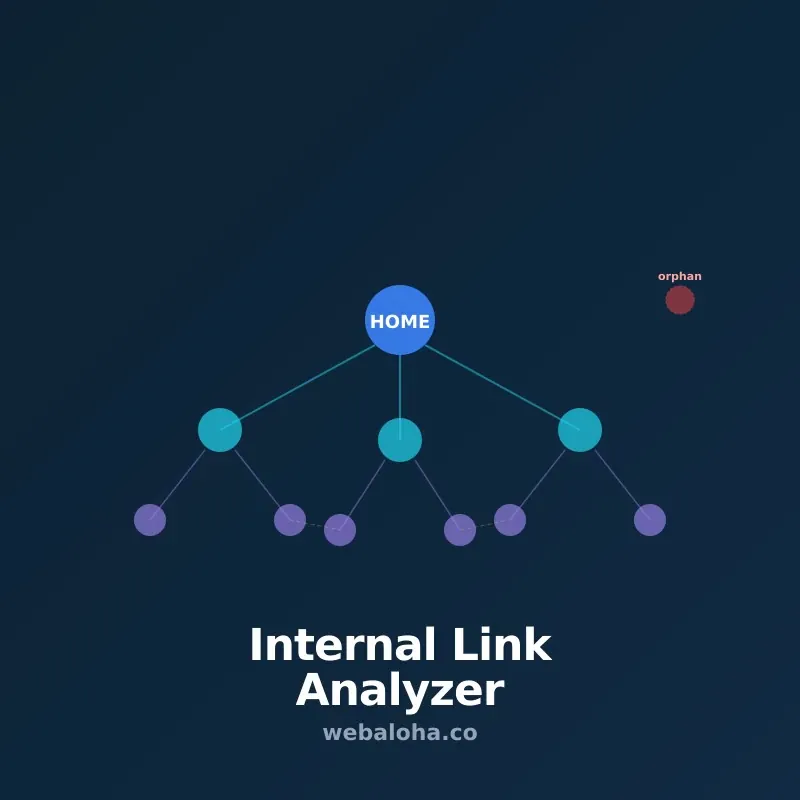
The compounding effect works like this: good on-page optimization makes pages worth linking to, internal linking distributes link equity across your site, and external backlinks amplify the authority of your whole domain.
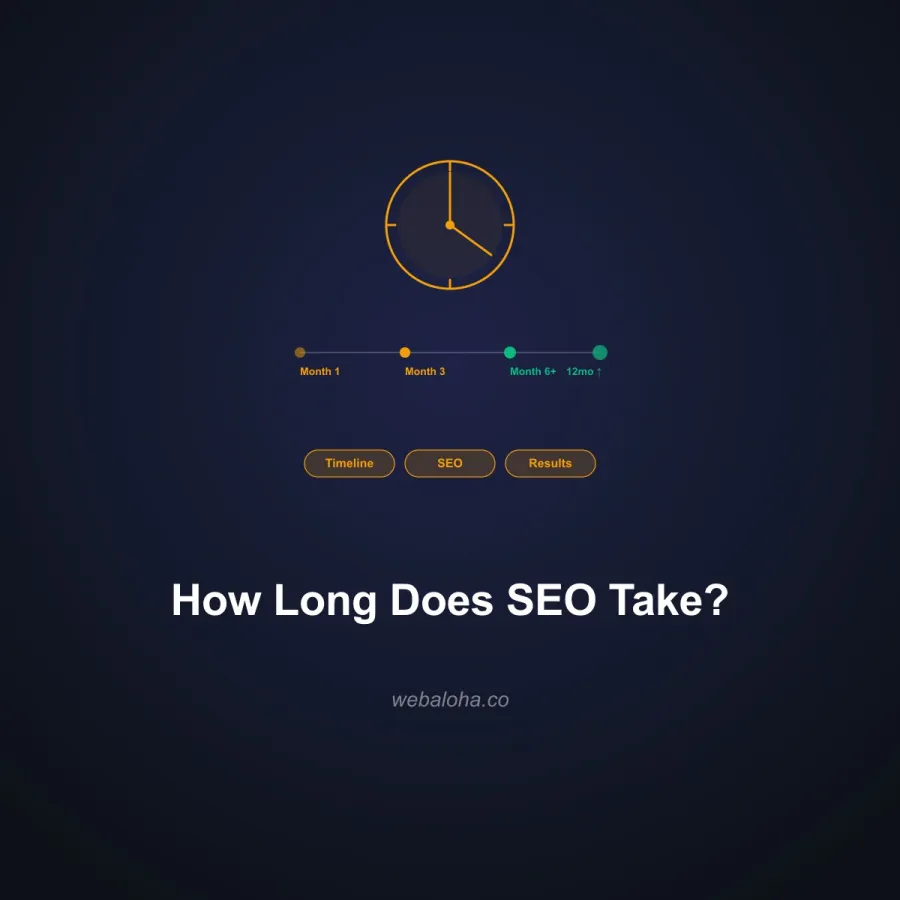
Results also take time. If you are wondering how long your link building investment will take to pay off, our guide on how long SEO takes gives realistic timelines based on different starting points and competitive environments.
For businesses focused on AI search alongside traditional rankings, improving your E-E-A-T signals is tightly linked to the same off-page authority building described in this guide. Use our AI Search Visibility Checker for a technical readiness screen; measure actual appearances with a repeatable cross-platform prompt sample.
Building a strong backlink profile takes time, consistency, and a clear strategy. If you want help developing and executing an off-page SEO program for your business, our team at Web Aloha specializes in exactly this. Explore our SEO Services or get in touch to talk through what’s realistic for your site and market.
DIY or professional help?
| Work you can own | When specialist help can be useful |
|---|---|
| Correct genuine business listings and answer relevant journalist requests | Audit an established link profile or investigate a manual action |
| Publish useful evidence and maintain partner information | Plan research, verify sources and coordinate a scoped outreach project |
| Track replies, referral visits and qualified enquiries | Review whether the work supports the wider search and conversion strategy |
This article is an educational guide, not an offer of a fixed number of paid links. Our SEO services cover agreed technical, content and measurement work; discuss whether off-page review or outreach belongs in your specific scope. No placement, ranking or AI citation is guaranteed.
Frequently asked questions
What is off-page SEO?
Off-page SEO refers to everything you do outside your own website to improve its search engine rankings. This primarily means earning backlinks from other websites, but also includes brand mentions, digital PR, social signals, and building your business's entity profile across the web. Off-page SEO signals tell Google that other people and publications find your content valuable and trustworthy.
Do backlinks still matter for SEO in 2026?
Links support discovery and Google uses link analysis systems. It does not publish a permanent top-three ranking-factor list or a universal backlink quota. Prioritize genuine relevance and editorial value, and avoid link spam.
What makes a backlink high quality?
A high-quality backlink comes from a page that is relevant to your topic, sits on a domain with genuine authority (real traffic, editorial standards, established history), uses descriptive anchor text, and is placed naturally within the content rather than in a footer or link list. Topical relevance is increasingly important, a link from a niche industry site often outperforms a link from a high-DA site in an unrelated field.
What is the best link building strategy for small businesses?
For small businesses, the most effective link building strategies are: local business citations and directory listings (fast wins, low effort), guest posting on industry-relevant blogs, and digital PR using original data or case studies. Broken link building and resource page outreach are also high-ROI tactics that don't require a large budget, just consistent effort and a good email pitch.
How long does link building take to show results?
There is no fixed deadline. Separate the delivery of research or outreach from editorial placements, referral visits and later search observations. A new link does not guarantee a ranking change.
What link building tactics should I avoid in 2026?
Avoid private blog networks (PBNs), paid link schemes, link exchanges, low-quality directory submissions, spammy forum profile links, and any service promising hundreds of backlinks for a flat fee. These tactics risk Google manual penalties and algorithmic demotions. Even if they provide short-term gains, the risk of a penalty and the cleanup cost far outweigh any temporary benefit.
What is digital PR and how does it build links?
Digital PR involves creating newsworthy content (original research, data studies, expert commentary, survey results) and distributing it to journalists and editors at publications in your industry. When a publication covers your story, they typically link back to your site as the source. These editorial links are among the strongest you can earn, and a single well-placed feature in a respected outlet can generate dozens of secondary links from other sites covering the same story.
What is broken link building?
Broken link building is the process of finding links on other websites that point to pages that no longer exist (404 errors), and then suggesting your own relevant content as a replacement. Website owners want to fix broken links since they harm user experience, so a well-timed outreach email offering a working replacement gets a reasonable response rate. Use a tool like our Broken Link Checker to find broken links on target sites.
How do unlinked brand mentions affect SEO?
A mention can help people discover a business and provide source material, but it is not equivalent to a backlink. Major AI providers do not publish a universal citation weight for unlinked mentions. Request a link only where it helps readers.
How many backlinks do I need to rank?
No fixed number can answer that. Query relevance, content, competition and multiple search systems influence results. A third-party link index is also incomplete; use it for research rather than a required link quota.